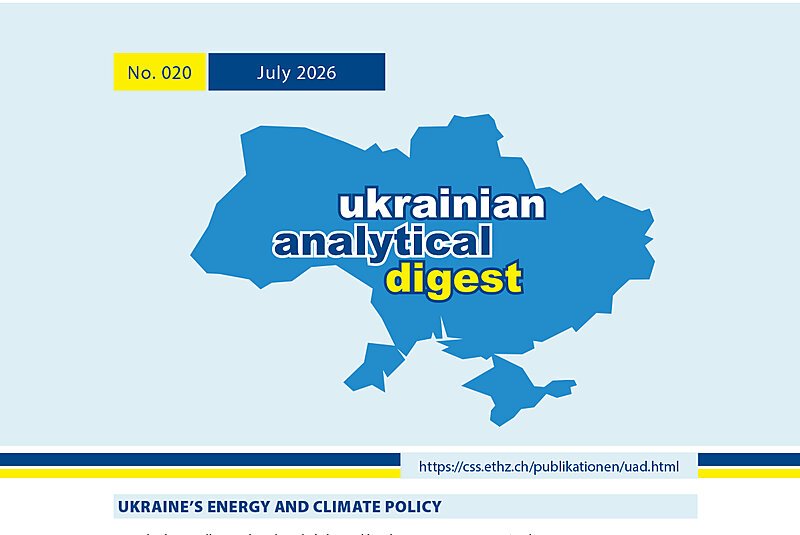
KECLab Energy and Climate Digest
Olia Evstigneeva, Vladyslav Mikhnych
June — August 2026
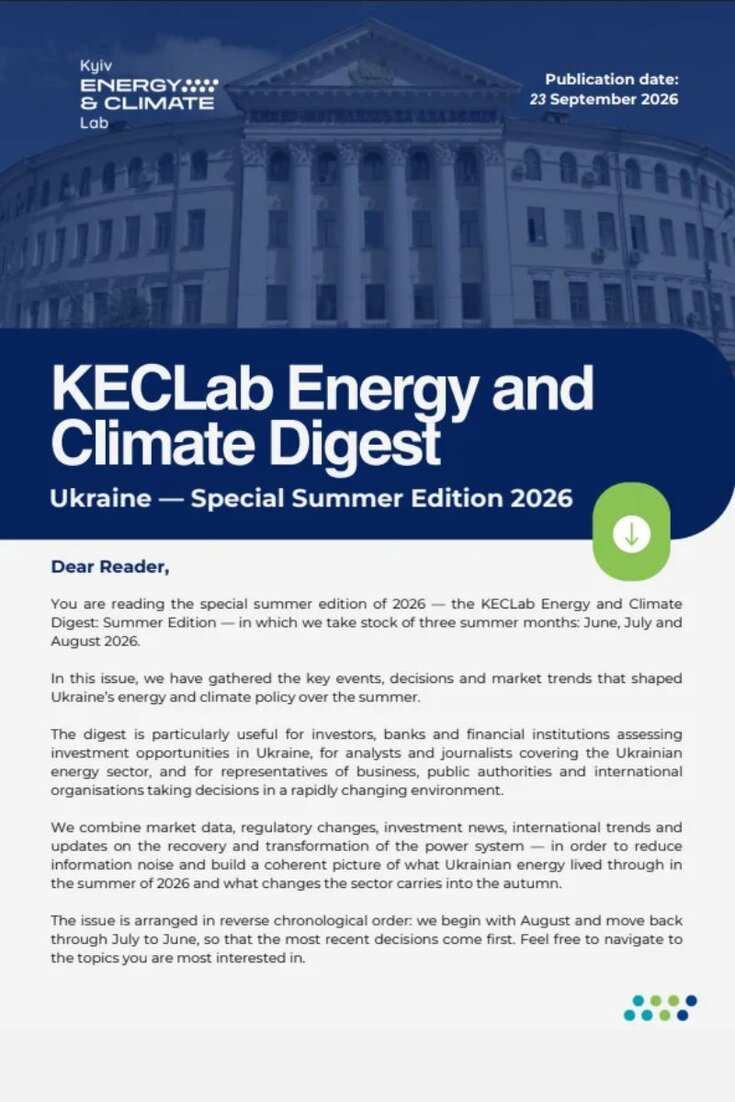
Your summer recap of Ukrainian energy and climate policy is out!
June to August brought more than just market ups and downs.
Several changes this summer could shape how the sector works for years.
We brought it all together in one place — the KECLab Energy and Climate Digest · Special Summer Edition 2026.
What stood out this summer:
- EU integration reached the market itself
- On 18 August, NEURC designated Market Operator as Ukraine's first NEMO. The law allows for several operators, so the market stays open. Technical coupling is still 12–18 months away, with 2028 or 2029 named as possible dates.
- The 2026 energy laws started to bite
- Laws No. 4777-IX and No. 4834-IX were adopted earlier this year, but their consequences arrived over the summer — NEURC's August package on renewables support, storage and guarantees of origin, and the NEMO designation itself.
- A date for the end of price caps
- Full removal of price limits on the wholesale market is planned for 1 May 2027, with NEURC retaining the right to reimpose them in the event of a sharp deficit. For investors, this is one of the summer's clearest signals.
- Flexibility is joining capacity as a priority
- Distributed gas generation above 1.8 GW, storage capacity past 600 MW, a 650 MW CCGT project and a new commercial aggregator show that balancing the system matters as much as adding megawatts.
- Grid connection becomes a factor in project economics
- NEURC's revised methodology, in force from 1 September, splits permitted capacity into offtake and injection. Cable pooling and flexible connection are steps forward, but for renewables + storage hybrids, connection costs rise substantially.
- More room at the green auctions
- The annual support quota was tripled to 1 GW, auction rules were updated on 13 August, and auctions are due in September
- Structural risks remain
Total market debt continues to grow, mainly on the balancing market, though debt to renewable producers fell sharply.
Debates over state generation auction lots have also put competition and market design back on the agenda.
Behind all this, the market stayed volatile: prices fell sharply in July and rebounded in August, while traded volumes grew every month.