

Good governance is the foundation of Ukraine's recovery.
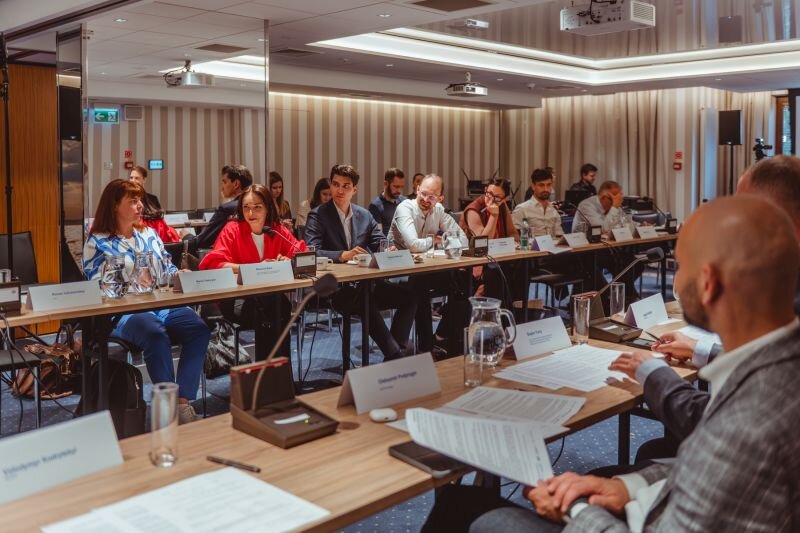
On the sidelines of the #URC2026, Green Deal Ukraїna, together with the Kyiv Energy and Climate Lab (KECLab), the International Energy Agency (IEA), the Ukraine Facility Platform, and the German-Ukrainian Bureau, convened a closed-door discussion under the Chatham House Rule on one of the most important, and often least visible, dimensions of recovery: energy governance.
The event brought together policymakers, experts and international partners to discuss three interconnected pillars of Ukraine's energy governance:
- Strengthening the institutional capacity of the Ministry of Energy
- Improving corporate governance of state-owned energy enterprises
- Advancing the reform and independence of the National Energy and Utilities Regulatory Commission (NEURC)
The discussion built on months of analytical work and numerous bilateral exchanges with key Ukrainian and international stakeholders. These consultations helped identify practical implementation challenges and shape the draft policy papers that served as the basis for our discussion.
The organisers presented initial findings and draft recommendations, followed by a frank and constructive exchange of views. It is clear: good governance and transparency are essential preconditions for Ukraine's recovery, investment, resilience and successful EU accession. Strong institutions, independent regulators, effective public administration and well-governed state-owned enterprises will be critical for delivering reforms and building long-term confidence among citizens, investors and international partners.
We would like to sincerely thank all participants for their openness, thoughtful contributions and willingness to engage in such an honest and substantive discussion. The quality of the debate once again demonstrated the value of bringing together different perspectives in a trusted setting.
The outcomes of the discussion will continue to inform our work. Together with our partners, we will further develop the analysis and recommendations, taking on board the rich and constructive exchange of views. We look forward to publishing the final policy papers in the coming months and contributing to Ukraine's governance, recovery and European integration agenda.
Susanne Nies, Janez Kopač, Talya Vatman, Oleksandr Vizir, Oscar Fast, Mattia Nelles, Inna Sovsun, Olga Bondarenko, Roman Vybranovskyi, Mariia Tsaturian, Inna Nelles (Borzylo), Georg Zachmann